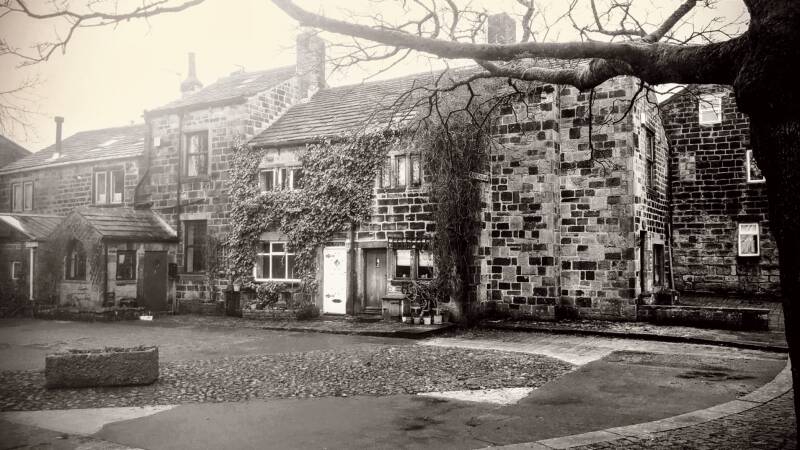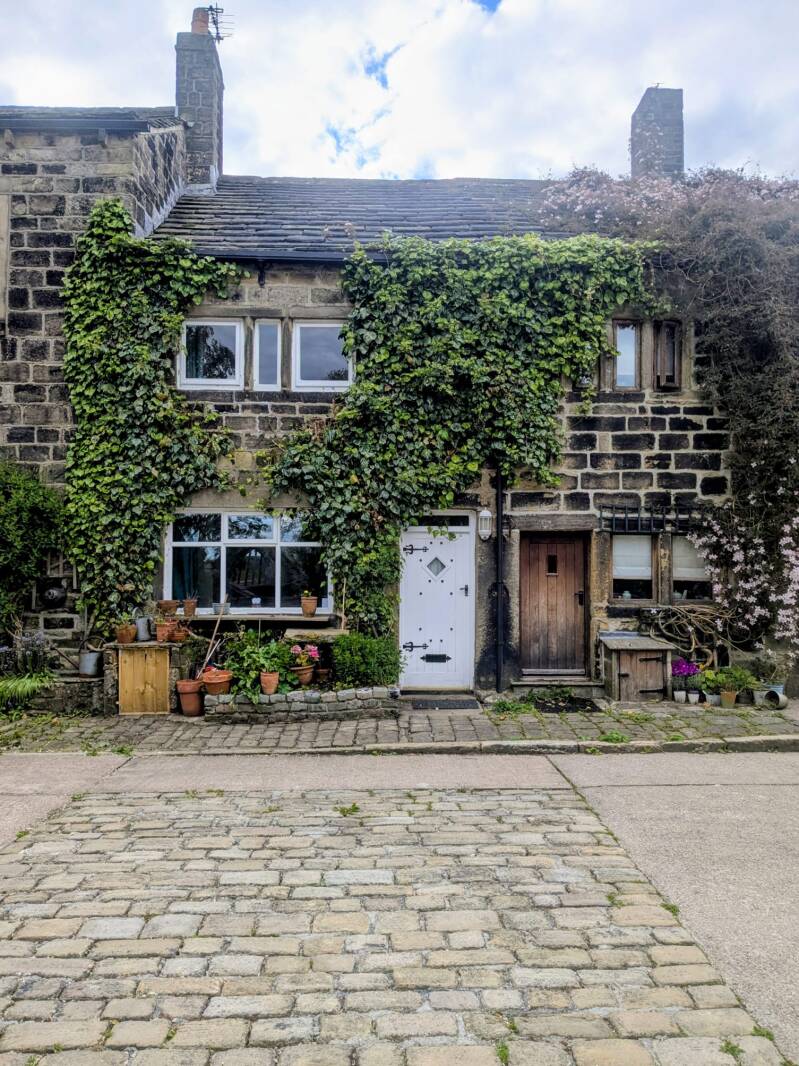
Weavers Cottage
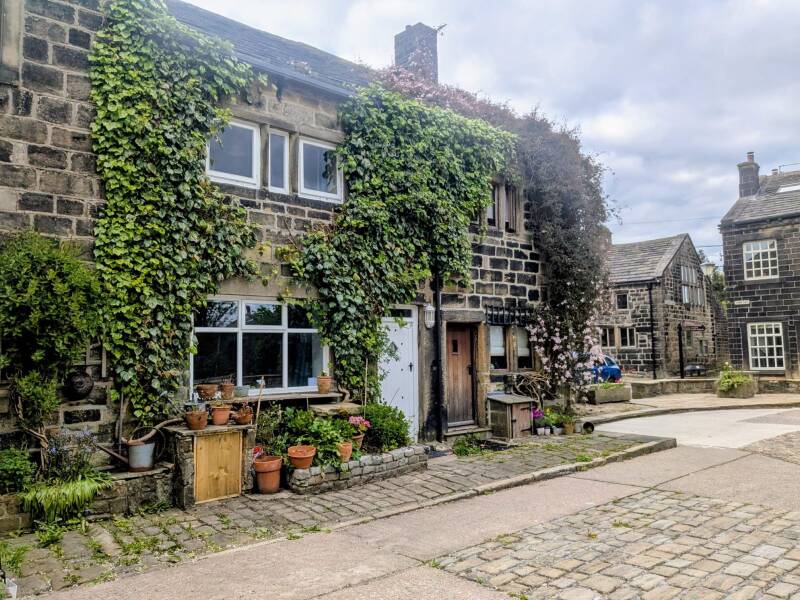
Weavers Cottage is on Weavers Square in the heart of Heptonstall village and overlooks the ruins of Thomas a Beckett church. See more on the history of Heptonstall and its famous (and infamous) inhabitants below.
The cottage has a warm cosy living room with wood burning fire and small galley kitchen, kitted out with modern appliances.
Upstairs is a large bedroom with king size bed, a brand new luxury bathroom (shower only), and a 'book nook' reading area. There is a further living space/ single bedroom reached by a modern modular spiral staircase in the attic.
Heptonstall - a history
Heptonstall was mentioned in the Domesday Book (1087) as a centre for hand-loom weaving, where wool and cotton were brought over the packhorse trails by drovers to cross the river at Hebden Bridge. The remains of the stone-slabbed drovers tracks still remain across the moors today, as do fields of cotton grass from dropped seeds (visit in May-June to see the moor covered in white fluff).
Today, Heptonstall is known for its well-preserved charm, literary (Sylvia Plath's grave) and religious connections (oldest Methodist chapel in continuous use, established by John Wesley in 1764), and stunning Calder Valley views, attracting visitors seeking history and tranquility.
During the English Civil War, Heptonstall was a Parliamentarian stronghold in a Royalist region. The Battle of Heptonstall took place in November 1643, where its 800 defenders used the steep terrain and local knowledge to repel an initial Royalist assault. The town was later sacked by larger forces, devastating the local wool trade before Parliamentarians eventually withdrew. But the Ghost of a Roundhead can sometimes be seen riding across the cobbles of Heptonstall.
The cottage overlooks the ruins of St Thomas a Beckett church, which hosts weddings and music festivals. Amongst the notables in the churchyard are “King” David Hartley, founder of the Cragg Coiners. In the 1700s, the gang clipped the edges off gold coins, and minted new ones - up to one-quarter of coins circulating in England at the time had been made by the Hartleys.
"King" David was hanged at Tyburn near York in 1774. You can find his grave by looking for the pile of coins left by people who hope it will bring them luck to find his lost hoard.
The American poet Sylvia Plath, who was married to Ted Hughes from nearby Mytholmroyd, is buried in the new St. Thomas the Apostle's cemetary (opposite the churchyard). Many fans leave trinkets on the grave - pens, badges and jewellery.
The village’s oldest house is Stag Cottage (circa 1580) tucked away in a small courtyard. Next to the public car park is the doorway to the “dungeon”, once used as a lock-up. Nearby there is the pinfold, built to hold livestock but now popular as a picnic area.
In the mid 1980s the paved road through Heptonstall was torn up, revealing the original stone setts. At the same time the modern street lights were replaced with ones which resemble cast-iron gas lamps from the late 19th century.